
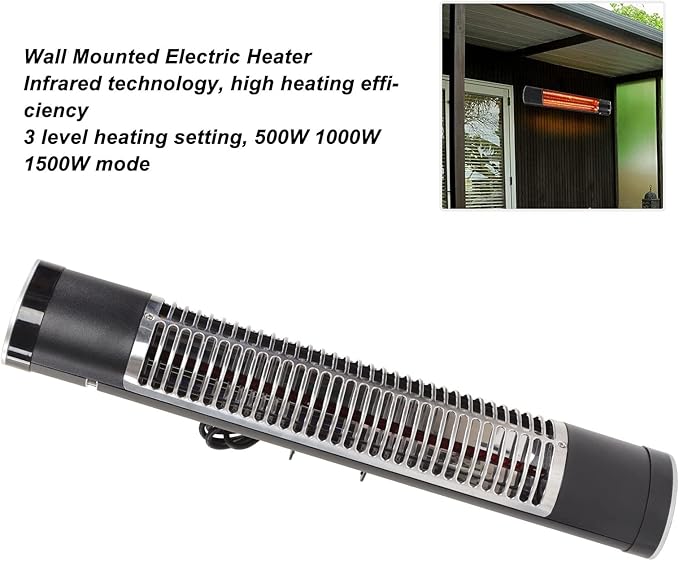
The Truth About IP66 Seals in Infrared Heaters
You’ll see “IP66 rated” slapped on almost every outdoor heater these days. But here’s the catch: usually, that rating only covers the outer shell. The actual electrical junctions? That’s a different story. In high-wattage infrared systems, the real danger zone is right where the lead wire hits the heating element. We see it all the time. The heat from the lamp travels backward along the wire, basically baking the insulation until it gets brittle and cracks. Then, the first bit of rain or dew hits those cracks, and boom—you’ve got a short circuit.
Why the “Standard” Stuff Just Doesn’t Cut It
If you’re dealing with low-heat electronics, basic silicone or potting compounds are fine. For these heaters? Forget about it. Infrared lamps put out an insane amount of radiant heat. If your seal can’t handle a constant 200°C+, the material starts to shrink. It pulls away from the wire, leaving a tiny gap. It’s like a straw—it literally sucks moisture right into the electronics. That’s why we stick to OEM-grade sealing. We use things like high-temp fluoro-silicone or ceramic-glass composites. These materials actually move and breathe with the metal as it heats up and cools down. If you go with a generic assembly, you’re probably looking at a failure within a single season of outdoor weather.
The Balancing Act: Rigidity vs. Vibration
Now, you might think, “Just make the seal rock solid.” But there’s a trade-off. If a seal is too stiff, it turns the wire into a frozen rod. In industrial setups where machines are humming and vibrating, that rigidity is a killer. It can actually snap the tiny copper filaments inside the wire. To fix this, we use a graded transition. It’s stiff right at the element where you need the protection, but it softens up as it moves toward the cable gland. One last tip: watch how your wiring harness is supported. If the cable is just hanging there, its own weight pulls on the seal. No matter how fancy the material is, mechanical stress will eventually break it. Keep your bend radius wide. Give the wire some room to breathe, and your seal will last a whole lot longer.