Getting Glassware Annealing Right with Medium-Wave IR
If you’ve ever had a piece of lab glass just… pop… during the cooling process, you know exactly why we’re talking about this. It’s usually because of internal stress. If you don’t neutralize that tension, your glassware is basically a ticking time bomb. That’s why we lean on medium-wave infrared (MWIR) lamps. They just “hit” borosilicate and soda-lime glass better than short-wave options do. It’s a matter of chemistry and absorption.
The Obsession with 0.1°C
Here is the tricky part: annealing is a balancing act. You have to hold the glass at that sweet spot—the annealing point—where it’s soft enough to let the stress go, but stiff enough that it doesn’t just slump into a puddle. If your heater swings by a few degrees, you’re asking for trouble. You either get thermal shock or you leave behind residual stress. We keep things steady within 0.1°C by pairing our MWIR lamps with fast-response thermocouples and high-res PID controllers. Because medium-wave radiation sinks into the glass more evenly, the core and the surface reach the same temperature. You don’t end up with that annoying “skin effect” where the outside freezes solid while the inside is still molten.
The Gear and the Heat
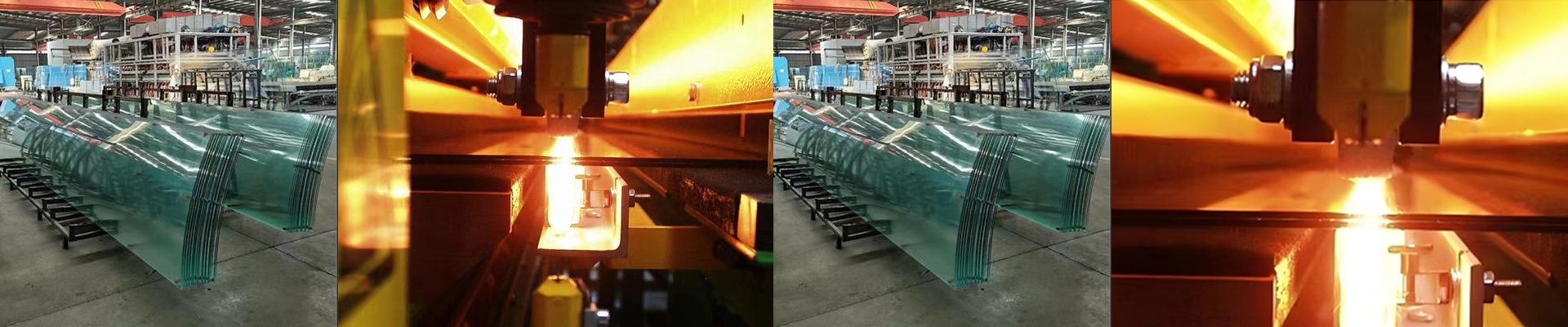
Our lamps use high-purity quartz envelopes. That’s a fancy way of saying we can push a lot more power through them without the tubes burning out. Plus, you can set them up in a zoned array, which is the best way to kill off those annoying cold spots in your oven. But there’s a catch. High-density MWIR arrays put out a lot of waste heat outside the actual target zone. If you don’t get your ventilation and insulation sorted, the oven shell starts radiating heat back into the room. Once that happens, your ambient sensors start lying to you, and everything goes sideways.
Stopping the Shatter
When you can control the ramp-down rate with this kind of precision, you’re essentially managing how the glass shrinks. It gets rid of those microscopic tension points that cause spontaneous shattering. The best part? Less scrap. We’ve found that when the thermal control is this tight, you don’t have to spend half your day squinting through a polariscope after every single batch. You just know it’s done right.